Instructors & TAs
Automate structural similarity checks across dozens of programming assignments. Quickly identify suspicious submissions with clear, visual evidence.
A high-accuracy hybrid code plagiarism detector that combines K-gram Winnowing, weighted Jaccard, LCS, and JavaParser-based AST similarity to instantly detect Type 1-3 code clones.
Currently optimized exclusively for Java source code
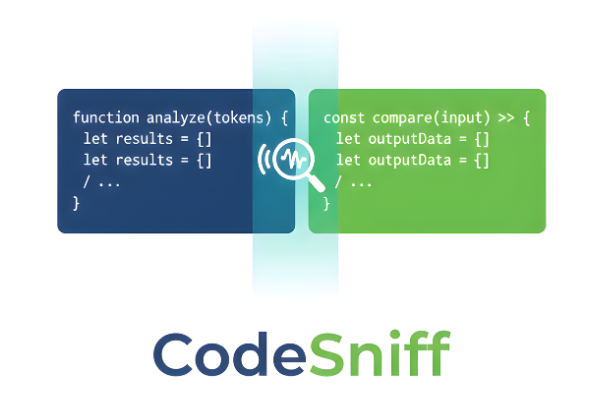
AST parsing and tokenized k-gram fingerprints resist renaming, statement reordering, and comment-removal tricks. Safely detects disguised plagiarism that text matchers miss.
Combines Winnowing fingerprint similarity, coverage metrics, LCS statement alignment, and AST structural comparison for reliable, nuanced similarity scores.
Side-by-side highlighting makes reviews fast. Authenticated users can track analysis history, search past runs, and export reports in PDF, CSV, or HTML.
When it comes to coding assignments or software auditing, originality and deduplication are key. Our structural similarity detector shines when you need fast, reliable checks and clear guidance for evaluating code overlaps.
Automate structural similarity checks across dozens of programming assignments. Quickly identify suspicious submissions with clear, visual evidence.
Check your own code before submission. Accidental overlap happens, and a structural check prevents embarrassing academic integrity mistakes.
Audit large codebases for duplicated logic, refactor opportunities, and unintentional copy-pasting using scalable batch analysis.
CodeSniff operates as a fast, in-memory structural comparison engine. It detects exact matches, logic mutations, and heavy structural rearrangements. Standard framework boilerplate is detected and handled correctly so that common setups are not flagged as plagiarism by default. The engine looks at the actual AST and execution logic, not just string similarity.
Similarity ranges from intentional theft to accidental overlap. We flag both: deliberate obfuscation (renamed variables, reordered loops, inverted conditionals) and unintentional duplication. The tool helps users understand the true overlap by identifying problem areas and categorizing the clone type.
The consequences of plagiarism can be severe. Regular structural checks limit risk and teach good habits. Use CodeSniff as part of your grading workflow or codebase assessment to remain confident in your code's originality and maintain DRY principles.
Drag & drop source files here
or
Forgot password?
New account? Sign
Up
CodeSniff uses a hybrid approach leveraging AST (Abstract Syntax Tree) parsing and tokenized k-gram fingerprinting to accurately detect Type 1 to 4 code clones.
The similarity score is a percentage reflecting the structural and token overlap between the queried file and the reference codebases. Higher percentage indicates higher similarity.
Verdicts are categorized as Low (green), Medium (orange), and High (red) similarity. High generally indicates a strong likelihood of cloned code.